As the global asset management industry continues to develop rapidly, national financial regulators play an important role in fund management, securities issuance, and investment advisers’ operations. The regulatory system not only affects the compliance requirements of fund managers, but also determines investor protection, capital flows, and market stability.
In global capital markets, some regulators are considered to be important poles of financial regulation because of their stringent regulatory standards and international influence. The top 10 fund regulators around the worldHelp fund managers to understand the regulatory systems in different regions.
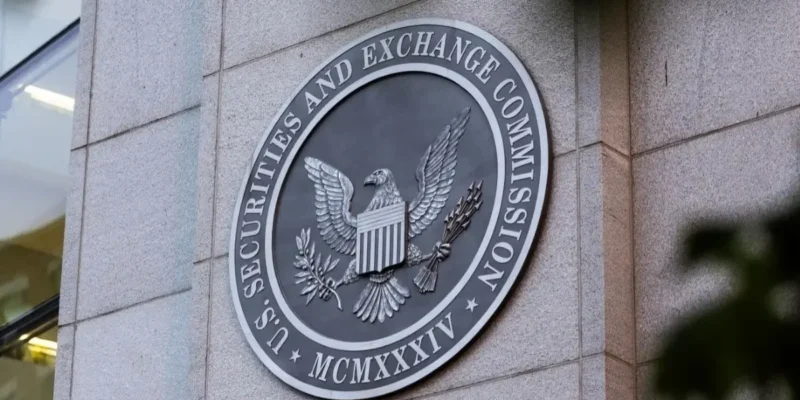
U.S. Security and Exchange Commission – the world's most important securities regulator
The United States Securities and Exchange Commission (SEC) is one of the most influential securities regulators in the world, and is responsible for regulating the United States capital market.
The main regulatory areas of the SEC include:
- Securities issues
- Private fund-raising
- Investment Adviser (RIA)
- Disclosure of listed company information
The core laws regulated by the SEC include:
- Securities Act of 1933
- Investment Advisers Act of 1940
- Investment Company Act of 1940
Due to the size of the capital market in the United States, the regulatory policy of the SEC tends to have far-reaching implications for the global financial sector.
* The present document was not edited before being sent to the United Nations translation services.
The Singapore Finance Authority (MAS) is both a central bank and a financial regulator.
MAS is responsible for supervising:
- Bank
- Securities market
- Fund Management Corporation
- Insurance
It's from Singapore. VCC Fund StructureThis has made it one of the fastest growing fund registers in Asia.
The MAS regulatory system features:
- Tax policy is friendly
- High regulatory transparency
- Attracts a lot of family offices.
SFC — Regulatory Authority of the Asian Asset Management Centre
The Hong Kong Securities and Futures Supervisory Commission (SFC) is responsible for overseeing Hong Kong ' s financial markets.
SFC ' s main supervision:
- Securities brokers
- Fund Management Corporation
- Investment Adviser
- Asset management unit
Fund management companies usually need to apply. Type 9 (assets management licence) It's not just a matter of law, it's a matter of law.
The Hong Kong regulatory system combines international standards and is closely linked to the capital market in China.
Financial Compliance – one of the most important financial regulators in Europe
The British Financial Conduct Regulatory Authority (FCA) is responsible for the regulation of the financial markets in the UK.
FCA regulatory coverage includes:
- Investment Management Corporation
- Securities exchange agencies
- Asset management industry
- Financial science and technology enterprises
The UK Fund Management Industry is the main source of funding. MiFID II and AIFM commandsImpact.
As a global financial centre, the regulatory policy of the FCA in London has important implications for the asset management industry in Europe.
Commission de Survellance du section Financier (CSSF) — European Central Fund Regulatory Authority
The Financial Supervisory Council of Luxembourg (CSSF) is responsible for overseeing one of the largest funds centres in Europe.
The structure of the Luxembourg Fund consists of:
- RAIF
- SIF
- SICAV
These fund structures have made Luxembourg an important repository of European private and public funds.
CIMA — Global Offshore Fund Regulatory Authority
The Cayman Islands Financial Authority (CIMA) oversees the Cayman Islands financial market.
The Cayman Islands is one of the largest offshore fund centres in the world.
CIMA is mainly responsible for:
- Hedge funds
- Private fund-raising
- Investment fund structure
Many international fund managers use Cayman Fund structure It’s not just a matter of getting the world’s investors involved.
VII. Dubai Financial Services Authority (DFSA) — Middle East Financial Regulatory Centre
DFSA oversees the Dubai International Finance Centre (DIFC).
In recent years, Dubai has attracted a large number of fund managers and family offices.
Capital markets in the Middle East are growing rapidly, and the regulatory system of DFSA is receiving increasing international attention.
VIII. Financial Services Regulatory Autonomy (FRRA) — Abu Dhabi Financial Regulatory Authority
FSRA is the financial regulator of the Abu Dhabi Global Marketplace (ADM).
ADGM has grown rapidly in recent years, becoming an important financial centre in the Middle East.
Its regulatory system is adopted English common law systemand attracts global asset management agencies.
IX. AUSTRALIA SECURITES AND INVESTMENTS COMMISSION (ASIC) — Australian Financial Regulatory Authority
The Australian Securities and Investment Commission (ASIC) regulates the Australian capital market.
The areas covered by ASIC include:
- Securities market
- Investment funds
- Financial service providers
The Australian asset management industry has some influence in the Asia-Pacific region.
Financial Services Commission (FSC) – Supervisory Authority for BVI Offshore Funds
The British Virgin Islands Financial Services Commission (FSC) regulates the BVI financial market.
BVI is one of the world ' s most important offshore financial centres, where many of the fund structures are established.
Its regulatory environment is relatively flexible and is therefore welcomed by some private fund-raising and investment institutions.
Comparison of major global fund regulators
| Regulatory bodies | Region | Regulatory focus |
|---|---|---|
| SEC | United States | The largest global capital market |
| MAS | Singapore | Asian Asset Management Centre |
| SFC | Hong Kong | Asia Securities Regulation |
| FCA | United Kingdom | European financial regulation |
| CSSF | Luxembourg | European Foundation Centre |
| CIMA | Cayman. | Offshore Fund |
| DFSA | Dubai | Middle East Financial Centre |
| FSRA | Abu Dhabi | Emerging financial markets |
| ASIC | Australia | Asian and Pacific capital markets |
| FSC | BVI | Offshore finance |
Concluding remarks
As the global asset management industry develops, national financial regulators play a key role in maintaining market stability and protecting investors.
Key regulators in the United States, Europe and Asia are constantly updating their policies to accommodate the development of digital assets, financial science and technology and cross-border investment.
For fund managers and financial institutions, knowledge of the rules of different regulatory systems is an important basis for accessing global capital markets.